Showing posts with label Skunk Bear. Show all posts

Friday, April 20, 2018

The amazing and incredible egg

Eggs are laid by animals of many different species, including birds, reptiles, amphibians, mammals, and fish, and have been eaten by humans for thousands of years. Today, we mostly eat chicken eggs, but duck and quail eggs are also commonly eaten. Fish eggs, also called roe, are consumed as caviar or in delicious sushi.

When it comes to chicken eggs, you may like to eat them boiledfried (over easy or sunny side up), scrambled, in an omlette, poached, or as a frittata

For detailed nutritional information about eggs click here.

The creative folks at NPR's Skunk Bear tried to answer one scientific question about eggs: how do chicks in the egg get oxygen? Watch and learn.


Here are some other interesting facts about eggs:

Mass production of chicken eggs is a global industry. In 2009, an estimated 62.1 million metric tons of eggs were produced worldwide from a total laying flock of approximately 6.4 billion hens!

The largest bird's egg belongs to the ostrich and they are enormous: on average they are 15 centimetres (5.9 in) long, 13 centimetres (5.1 in) wide, and weigh 1.4 kilograms (3.1 lb).


The vervain hummingbird, the second smallest bird species, is found in the Dominican Republic, Haiti, and Jamaica. It lays the smallest eggs of any bird with an average length of 1 cm (0.39 in) and weight of 0.375 g.


Originally sold as street food in the Philippines, balut is special egg dish. It is a developing bird embryo (usually a duck) that is boiled and eaten from the shell. Often served with beer, balut is popular in Southeast Asian countries. Yumm!


Century eggs refer to special Chinese preparation where chicken/quail/duck eggs are preserved in a mixture of clay, ash, salt, quick lime and rice hulls for weeks or months before being consumed.


Click here to see another web page with more information about eggs.

Lastly, thinking about eggs made me think of the song Egg Man by the rap group The Beastie Boys, from their classic 1989 album Paul's Boutique. Enjoy.


Monday, March 5, 2018

A Sketchy History of the Pencil Lead


This is the story of where graphite comes from and how the pencil lead was invented.


Here are some other unusual pencil facts that might interest you:


Thomas Edison, the famous American inventor had his pencils specially made by Eagle Pencil to a special length, thickness, and with a softer graphite than was normally available.

John Steinbeck, the great 20th Century American novelist, was an obsessive pencil user and is said to have used as many as 60 a day. His novel East of Eden took more than 300 pencils to write.

Roald Dahl, the creative genius behind children’s books like Charlie and the Chocolate Factory, used only pencils with yellow casing to write his books. He had 6 sharpened pencils ready at the beginning of each day and only when all 6 pencils became unusable did he resharpen them.

The average pencil holds enough graphite to draw a line about 35 miles (56 km) long or to write roughly 45,000 words.

Edward Nairne is said to have developed the first rubber eraser to erase pencil marks. Until then, writers removed mistakes with bread crumbs!

Pencils can write in zero gravity and so were used on early American and Russian space missions—even though NASA engineers worried about the flammability of wood pencils in a pure-oxygen atmosphere, not to mention the problem of floating bits of graphite.

In 2007, Ashrita Furman presented the world's largest pencil – 76 feet (23 m) long, 18,000 pounds (8,200 kg) (with over 4,500 pounds (2,000 kg) for the graphite centre). It cost over $20,000 to make. Click here to see a video about it.

Click here to see gorgeous photos from a New York Times photo essay of one of the oldest American pencil factories (since 1889) the General Pencil Factory in Jersey City, New Jersey.

Friday, March 2, 2018

Corn, maize, and especially POPCORN!

One of my favorite foods in the summer is fresh sweet corn served "on the cob" with butter and salt. Maybe you are more familiar with canned corn that you add to a salad. But most everyone knows and loves POPCORN!

Corn, or maize as it is also called, has many uses: corn ethanol as a biofuel, animal feed and other maize products, such as corn starch and corn syrup, which is used as a sweetener in many processed foods. As a result of all of these uses, it is the number two agricultural product globally, after sugar cane. That's right; more corn is grown globally than wheat or rice!


10,000 years ago corn was domesticated in Southern Mexico and had a key role in the development of the civilizations of the Americas. The image on the right is of the Mayan maize god, Hun Hunahpu who appears in the Mayan tale Popol Vuh. At its origin, it was actually a grass, but today the variety of colors and types of corn is quite amazing. It is eaten as Mexican tortillas, corn chips, as tomales, corn "on the cob", or all over the world as popcorn.

This last use of corn as popcorn is the real focus of this post. Skunk Bear from NPR have made a video about the science of popcorn, making use of high speed video and an electron microscope. Enjoy.


PS: If slow motion video interests you, there a numerous videos of popcorn popping on Youtube (i recommend The Slow Mo Guys), but this my favorite, by Warped Perception.


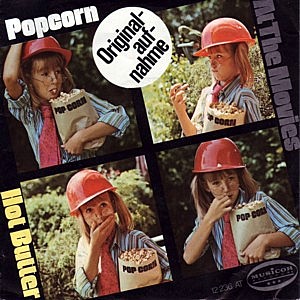
PPS: One final thing, "Popcorn" is an early synth-pop instrumental, composed by Gershon Kingsley in 1969 and first appearing on his album Music to Moog By. This version was recorded in 1972 by Hot Butter and became an international hit.


Wednesday, February 14, 2018

A neuroscience love song

Do you know about the role of dopamine, serotonin, and oxytocin in love? These are some of the chemicals responsible for our feelings and behavior when we are in love according to science.


This is a funny, science song from the people at Skunk Bear for Valentine's Day. Listen and enjoy.  
      

Friday, February 2, 2018

The Star Wars Sound of Singing Ice

When Cory Williams moved from California to Alaska in 2014, he discovered an unusual natural phenomenon: a singing frozen lake. He tried skipping rocks across the icy surface of Edmonds Lake, near Anchorage. His YouTube video of the laser blaster sound that the lake made has been viewed 11 million times.


This year, Williams returned to Edmonds Lake and made another discovery. The lake was singing on its own. Why? And how? The latest video from Skunk Bear, a science youtube channel, reveals the origin of that iconic sci-fi sound effect and explains why it can be heard every year in the cold north.

Here is the video. Turn on the subtitles if you need them.


Thursday, January 18, 2018

Do you want to live forever? Become a noun! - Eponyms

Do you know the word "sideburns"? The name comes from an American Civil War general Ambrose Burnside who was famous for his facial hair. "Sideburns" is therefore an eponym.


The people at Skunk Bear wrote this creative song to explain the eponym: a noun named after a person often the discoverer, inventor, etc. For example the saxophone family of instruments was invented by the Belgian instrument maker Adolphe Sax in 1840. Enjoy.


Skunk Bear has lots of great videos about science and other things. Click here to see their Youtube channel.